

START EXPLORING
Start with a place. Or start with a question.
Two ways to discover the knowledge of making.

What We Are
A Knowledge Infrastructure For World Craft
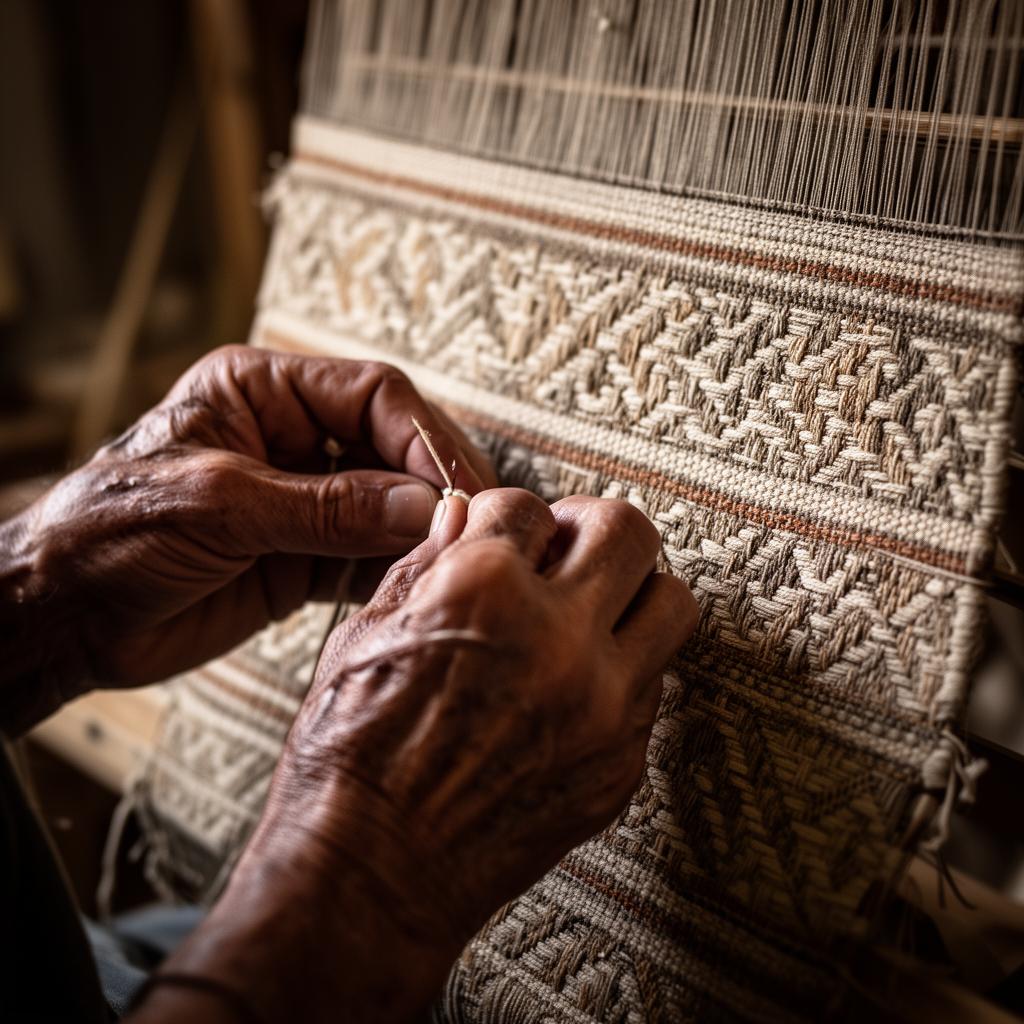
Craft knowledge is tacit: it lives in hands, not texts, and it dies with the people who carry it unless it is deliberately recorded. CRAFT documents artisanal techniques from every culture step by step, treating the technique itself, not only the finished piece, as what must be preserved, and makes the record available to designers, manufacturers, educators and institutions. That foundation supports research, teaching, creative collaboration and new objects developed with craftspeople and communities.
Why It Matters
The Evidence Base Is Already Taking Shape
Museums preserve objects and heritage registers identify important practices. CRAFT focuses on another layer: the procedural intelligence of making. The public Depository is an evolving research map that creates a foundation for deeper review, practitioner verification, field capture, and transmission.
Mapped technique records in the public research collection
Countries represented across 5 published regions
Fields in the procedural research schema
These figures describe research coverage, not completed field verification. Each record's maturity should be understood through the stages published in the Depository.
We live in a world that values what the mind produces over what the hands make. Mass production has made cheap abundance the norm and artisanal scarcity the exception, and the craftsperson, once the backbone of every civilization, has been pushed to the margins because their expertise is physical, not digital.
This is not progress. It is a loss of knowledge, of culture, and of an understanding of materials whose meaning and embodied judgment cannot be reduced to a dataset.
Two forces are accelerating that loss. Generative systems can fake the look of the handmade, down to a simulated maker's signature, at near-zero cost. And luxury houses, the industry most associated with the word "artisanal," have repeatedly been fined or placed under judicial administration for selling mass-produced goods as handcrafted. Authenticity can no longer be assumed. It has to be documented, or it will be counterfeited.
CRAFT was founded on the conviction that artisanal technique is not a relic but living knowledge, carried by people and communities. It deserves rigorous documentation, responsible stewardship, and ways for its custodians to decide how it is shared, taught and applied.
Against homogenization. Against disposability. For the knowledge that lives in human hands.
What We Are Building
The Ecosystem
CRAFT — World Craft Depository is more than a database. Its connected initiatives are designed to move knowledge responsibly from discovery to documentation, stewardship, transmission, application, and public understanding.


Our Commitment
A Craftsperson and Community Covenant
Access is not ownership, and CRAFT does not speak for the communities it documents. Six commitments keep preservation from becoming extraction.
Consent
Documentation begins with informed, specific permission.
Attribution
Practitioners and communities are credited in the form they choose.
Control
Custodians help define what may be public, restricted, or withheld.
Benefit
Commercial use requires a clear agreement and meaningful benefit-sharing.
Correction
Knowledge holders can challenge, amend, or contextualize a record.
Continuity
Documentation should support teaching, succession, and living practice.
About CRAFT
The Founder
Maurizio Serena is a brand strategist, designer and educator. He founded CRAFT – World Craft Depository to document the intelligence embedded in traditional making and help preserve, share and renew it.
"An act of restitution."
— Maurizio Serena, on why CRAFT exists
CRAFT is an independent cultural initiative founded by Maurizio Serena, with initial development supported by Naked River in Singapore.
Research
Documenting the Intelligence of the Hand
CRAFT develops methods for documenting artisanal technique as procedural, embodied, contextual, searchable, and transmissible knowledge—not merely as finished objects.
EXPLORE CRAFT RESEARCH →Get In Touch
Start A Conversation
Whether you are a potential co-founder, an institution, a brand, or a funder — we would like to hear from you. Press inquiries welcome.
START A CONVERSATION →